Voice-conservation focused surgery for larynx and other head and neck cancers, without compromising outcomes.

Head and neck cancer treatment at Surabhi Oncology is led by Dr. Venkatachala K, a surgical oncologist with 25+ years of experience and 25,000+ surgeries. Head and neck cancer is one of his main areas of surgical interest. His approach follows organ-conservation protocols in larynx cancers, aiming to preserve voice and swallowing function wherever it is oncologically safe.
Recovery is planned from the start. Surgery, speech and swallowing therapy, and counselling are coordinated as one plan, so you can speak, eat and return to daily life as fully as possible. The clinic is at Sharavathi Hospital, next to Attiguppe Metro Station in Vijayanagar, Bengaluru.

MBBS, MS, MCh, FMAS, 25+ years of surgical oncology experience, 25,000+ surgeries performed.
View Full Profile →Head and neck cancer is a group of cancers that begin in the mouth, throat, voice box (larynx), nose and sinuses, salivary glands, or the thyroid area of the neck. Most start in the flat squamous cells that line these moist surfaces. Because these structures control speaking, swallowing and breathing, treatment has to protect function as well as clear the cancer.
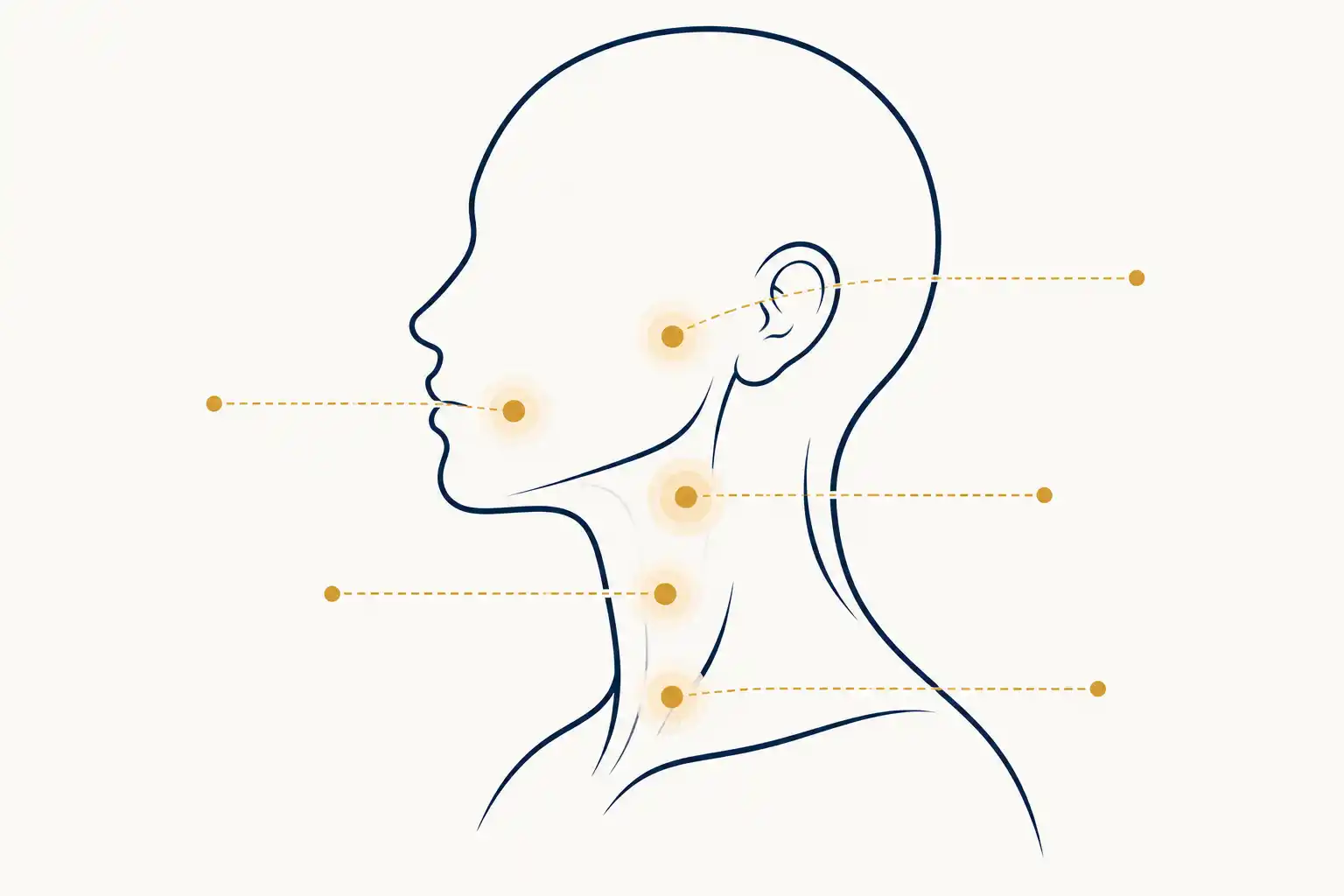
Most head and neck cancers are linked to tobacco and alcohol, and many can be caught early because they show up in places you can see or feel. Early examination gives the best chance of protecting your voice and swallowing.
Most of these signs have harmless causes, but any that lasts more than three weeks should be examined by a specialist.
Diagnosis answers three questions: is it cancer, how far has it spread, and how can function be protected. The answers set the stage, and the stage guides the treatment plan.
A careful examination of the mouth, throat and neck, often with a thin flexible camera (endoscope) to see the throat and voice box clearly.
A small tissue sample confirms whether cancer is present and what type it is. This is the step that makes the diagnosis certain.
CT, MRI or PET-CT scans show the size of the tumour and whether the neck lymph nodes or other areas are involved.
Head and neck cancers are treated with surgery, radiotherapy, chemotherapy, targeted therapy, or a combination. The right plan depends on where the cancer is, its stage, your general health and how well voice and swallowing can be protected. Early cancers are often treated with one approach, while advanced cancers usually need more than one. Your surgeon explains the options that apply to you.
Removes the tumour with a margin of healthy tissue. The aim is to clear the cancer while keeping speech, swallowing and appearance as intact as possible.
Uses high-energy rays to destroy cancer cells. It may be used instead of surgery in some early cancers, or after surgery to lower the chance of return.
Drugs that treat cancer cells throughout the body. In more advanced cases it is often given together with radiotherapy.
Newer medicines that act on specific features of the cancer, or help the immune system fight it, used in selected patients.
Exercises and training with a therapist to rebuild voice, speech and safe swallowing after treatment.
Emotional support, nutrition guidance and pain relief to help you and your family through treatment.
The larynx, or voice box, lets you speak, protects your airway and helps you swallow safely. Removing it completely (total laryngectomy) means losing the natural voice and having a permanent breathing opening in the neck. Organ-conservation protocols aim to control the cancer while keeping the larynx working, wherever it is oncologically safe.
Depending on the stage, this may mean surgery that removes only the tumour and a small part of the larynx, or treatment approaches that avoid removing the voice box. Dr. Venkatachala K plans every larynx cancer with conservation in mind from the first consultation.
Early-stage larynx cancers are the most suitable for conservation. In advanced disease, safe and complete removal of the cancer always comes first, and the plan is made after a full assessment.
From diagnosis to long-term follow-up, each step is explained in plain language, and rehabilitation is planned from the start rather than added at the end.
The cost of head and neck cancer treatment depends on the site and stage of the cancer, the extent of surgery, the length of hospital stay, whether radiotherapy or chemotherapy is needed, and the rehabilitation that follows. There is no single price, and a fair estimate is only possible after your diagnosis and staging are clear.
Surabhi Oncology accepts most health insurance plans, and concessional rates are available where needed. When you book, share your insurer and policy details so the team can confirm what applies to you. You can also read more answers on our FAQ page or hear from other patients in patient stories.
#1133/F, Service Road, Attiguppe Metro Station, RPC Layout, Vijayanagar 2nd Stage, Bengaluru 560040
Head and neck cancer is a group of cancers that start in the mouth, throat, voice box, nose and sinuses, salivary glands or the thyroid area of the neck. Most begin in the flat squamous cells that line these areas. Tobacco and alcohol are the most common causes.
Many head and neck cancers can be cured, especially when they are found early. The chance of cure depends on the site, the stage and the treatment. Early-stage cancers respond very well, and advanced cancers can still be treated. This is why a mouth ulcer or hoarseness that does not settle should be checked early.
Common early signs are a mouth ulcer that does not heal within three weeks, a white or red patch in the mouth, hoarseness lasting more than three weeks, a lump in the neck, pain or difficulty swallowing, and a sore throat or one-sided ear pain that does not go away. Most have harmless causes, but they should be examined if they persist.
Tobacco in any form, including smoking, chewing tobacco, gutka and betel quid, is the leading cause. Regular alcohol use adds to the risk, especially together with tobacco. HPV infection is linked to some throat cancers, and poor oral hygiene or long-term irritation from sharp teeth or ill-fitting dentures may also contribute.
In many cases, yes. Dr. Venkatachala K follows organ-conservation protocols in larynx cancers, which aim to preserve voice and swallowing function wherever it is oncologically safe. How much can be preserved depends on the stage and position of the tumour, and this is discussed with you after a full assessment.
Diagnosis starts with an examination of the mouth, throat and neck, often with a thin flexible camera to see the throat and voice box. A biopsy confirms whether cancer is present, and CT, MRI or PET-CT scans show its size and spread. Together these decide the stage and the treatment plan.
Many people regain good speech and swallowing, and therapy makes a real difference. After surgery, a speech and swallowing therapist works with you to rebuild voice, speech and safe swallowing. The extent of recovery depends on where the cancer was and how much treatment was needed.
Thyroid cancer starts in the neck, and it is often grouped with head and neck cancers. Its treatment differs from that of mouth and throat cancers, so it is best assessed individually. Book a consultation to discuss your diagnosis and reports.
The cost depends on the site and stage of the cancer, the extent of surgery, the length of hospital stay, whether radiotherapy or chemotherapy is needed, and rehabilitation. Surabhi Oncology accepts most health insurance plans and offers concessional rates where needed. Call +91 98456 71017 for an estimate after your consultation.
Yes, and it is a sensible step after a new diagnosis. Bring your biopsy report, scans and any treatment plan you have been given. Dr. Venkatachala K will review them, explain your options in plain language and discuss whether your voice and swallowing can be preserved.
Every head and neck cancer case is different. Book a consultation to understand your stage, options, and the best path forward.