Breast conservation first surgery, reconstruction, and precise lymph node techniques for breast cancer at every stage.

Breast cancer treatment at Surabhi Oncology is led by Dr. Venkatachala K, a surgical oncologist with 25+ years of experience and 25,000+ surgeries. His approach is to conserve the breast wherever it is oncologically safe, offer reconstruction when the breast must be removed, and use sentinel lymph node biopsy to protect the arm. Surgery, chemotherapy and radiation are coordinated as one treatment plan.
Breast cancer is one of Dr. Venkatachala K's main areas of surgical interest. Patients visit the clinic at Sharavathi Hospital, next to Attiguppe Metro Station in Vijayanagar, Bengaluru, from across west Bangalore and beyond.
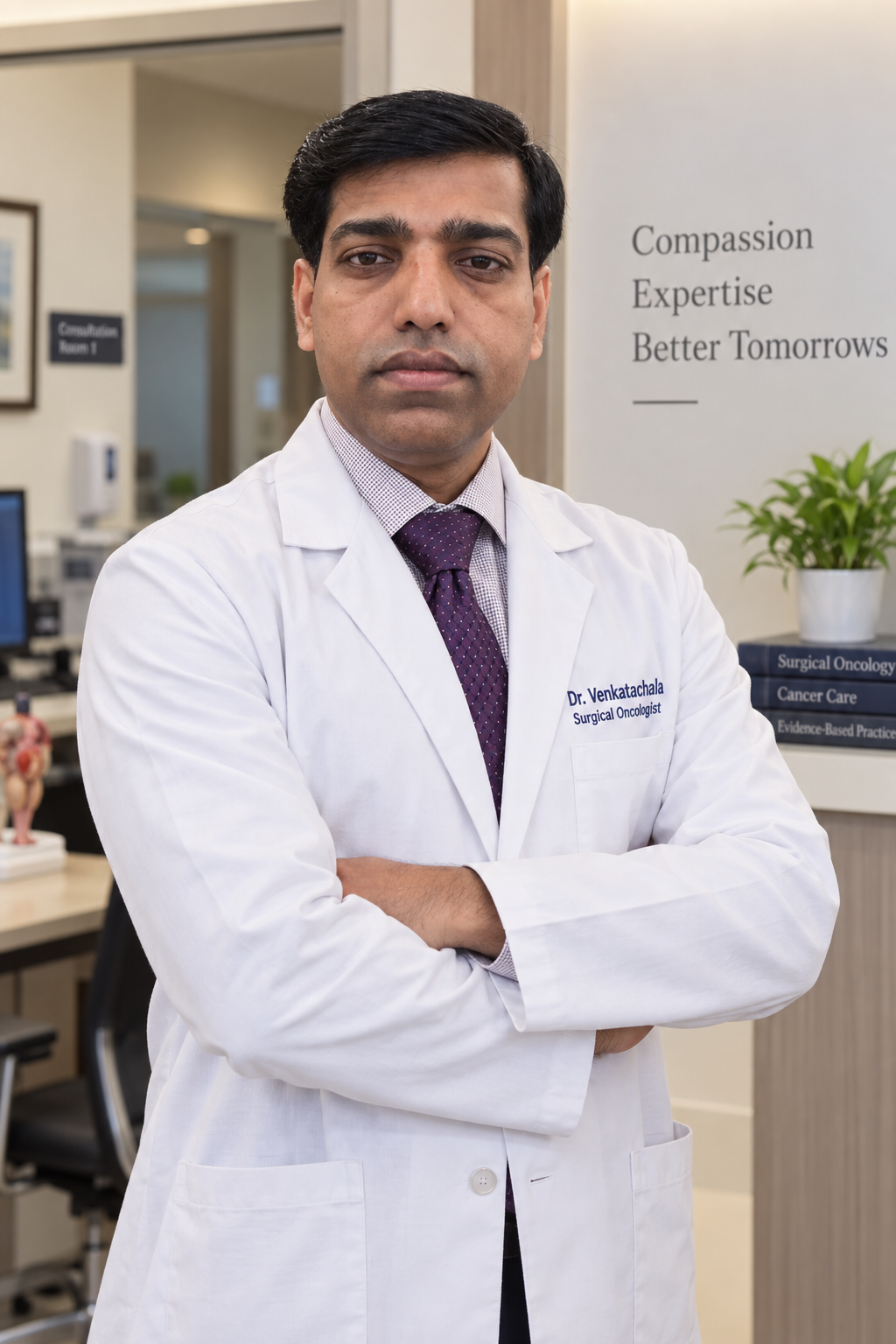
MBBS, MS, MCh, FMAS, 25+ years of surgical oncology experience, 25,000+ surgeries performed.
View Full Profile →Breast cancer treatment depends on two things: the stage, which tells us how far the cancer has spread, and the subtype, which tells us what drives its growth. Your biopsy, imaging and receptor tests decide both before any plan is made.
| Stage | What it means | Usual treatment direction |
|---|---|---|
| Stage 0 | Abnormal cells confined to the milk ducts (DCIS), not yet invasive | Breast conservation with radiotherapy is often possible |
| Stage I | Small tumour with no or minimal lymph node involvement | Breast conservation and sentinel lymph node biopsy |
| Stage II | Larger tumour and/or nearby lymph nodes involved | Surgery combined with systemic therapy and radiotherapy; breast conservation is possible in many cases |
| Stage III | Locally advanced disease with a large tumour or extensive lymph node involvement | Systemic therapy often first, followed by surgery and radiotherapy |
| Stage IV | Cancer that has spread to other organs | Systemic therapy is the mainstay; surgery is considered case by case |
This table is a general guide only. Every case is different, and your plan is set after a full assessment.
A lump does not always mean cancer, but any new change deserves an examination. Book a consultation if you notice:
Breast cancer is treated with a combination of surgery, radiotherapy, chemotherapy, hormonal therapy and targeted therapy. The mix depends on stage, subtype, age and your preferences. For early breast cancer, surgery is usually the central step. Dr. Venkatachala K performs the surgery and coordinates the rest of your care with the medical and radiation oncology team.
Removes the tumour and checks the lymph nodes. Options include breast conservation surgery and mastectomy, with reconstruction where wanted.
Uses high-energy rays to destroy any remaining cancer cells. It usually follows breast conservation surgery and is sometimes advised after mastectomy.
Drugs that treat cancer cells throughout the body. It may be given before surgery to shrink a tumour or after surgery to lower the risk of return.
Tablets that block or lower the hormones that fuel hormone receptor positive breast cancers, usually taken over several years.
Drugs aimed at specific features of the cancer, such as HER2 protein, used alongside other treatment for the right subtype.
Nutrition, pain relief, physiotherapy and counselling to help you recover well and keep your quality of life through treatment.
Breast conservation surgery removes the tumour with a margin of healthy tissue and keeps the rest of the breast, usually followed by radiotherapy. In suitable patients with early breast cancer, long-term studies show survival comparable to mastectomy. A mastectomy removes the whole breast and is advised when conservation would not be safe.
The final decision is made together with you. Where the tumour position or breast size could affect shape, oncoplastic principles, meaning tumour removal combined with reshaping of the breast, are used to protect the result.
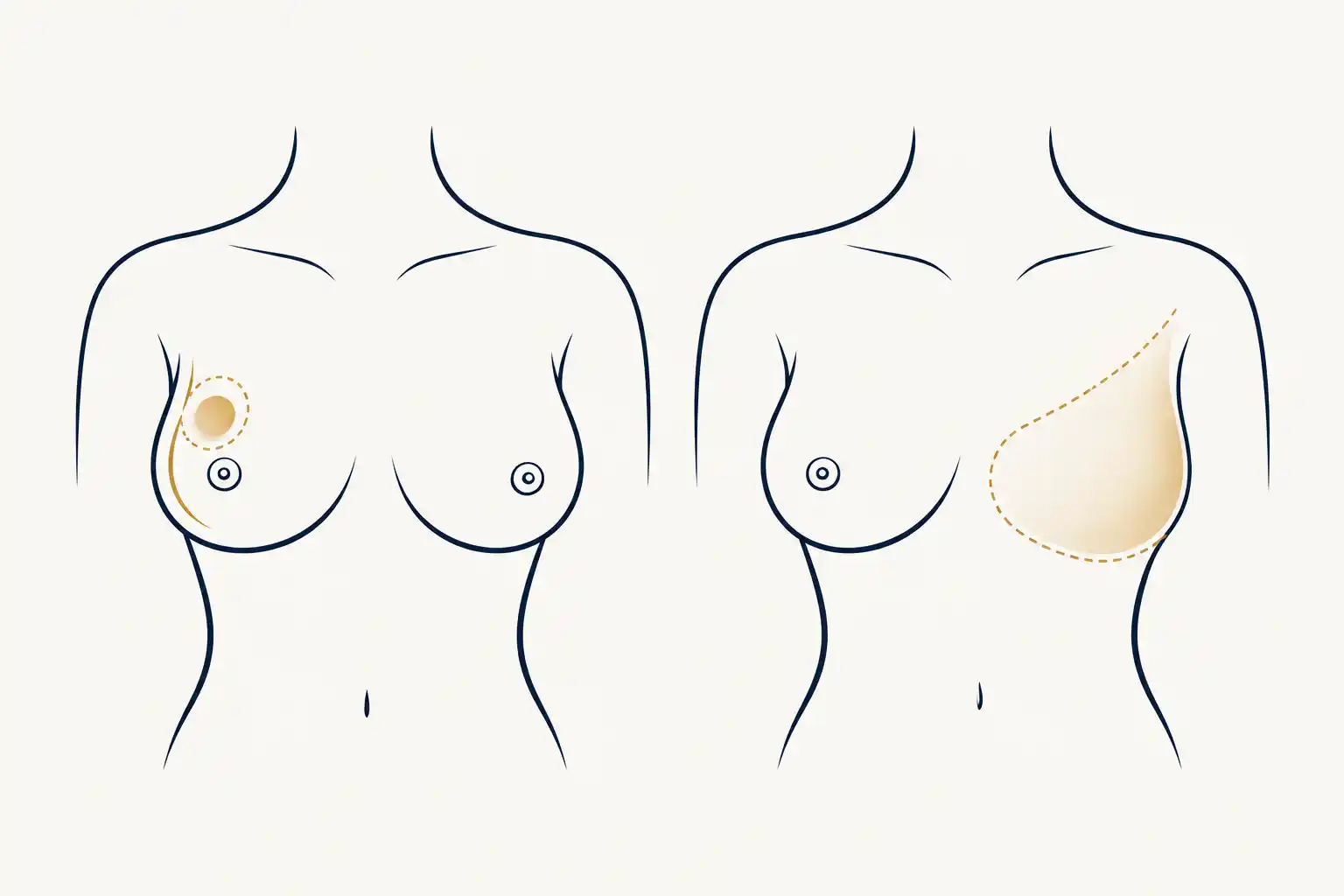
Protecting appearance and arm function is part of the plan from the start, not an afterthought.
Reconstruction rebuilds the breast after mastectomy, or restores volume after breast conservation. Options include implants, the latissimus dorsi (LD) flap, which uses muscle and tissue from the upper back, and the TRAM flap, which uses lower abdominal tissue. It can be done at the time of mastectomy or later.
The sentinel nodes are the first nodes that drain the breast. A tracer identifies them, and only those nodes are removed and tested. If they are clear, the remaining armpit nodes are left in place, lowering the risk of lymphedema, numbness and shoulder stiffness.
Some breast cancers are found on a mammogram and cannot be felt. ROLL uses a small amount of radioactive tracer, placed under imaging guidance, to lead the surgeon precisely to the lesion, so it is removed with minimal healthy tissue.
From the first consultation to long-term follow-up, each step is explained in plain language, and you are part of every decision.
The cost of breast cancer treatment in India depends on the stage of the disease, the type of surgery, whether reconstruction is included, the length of hospital stay, and whether chemotherapy, radiotherapy or targeted drugs are needed. There is no single price, and a fair estimate is only possible after your diagnosis and staging are clear.
Surabhi Oncology accepts most health insurance plans, and concessional rates are available where needed. When you book, share your insurer and policy details so the team can confirm what applies to you. You can also read more answers on our FAQ page or hear from other patients in patient stories.
#1133/F, Service Road, Attiguppe Metro Station, RPC Layout, Vijayanagar 2nd Stage, Bengaluru 560040
There is no single best treatment. The right plan depends on the stage, the subtype (hormone receptor, HER2 or triple negative), your age and your preferences. Most early breast cancers are treated with surgery, often followed by radiotherapy, with chemotherapy, hormonal therapy or targeted therapy added when the biopsy shows they will help.
Often, yes. Breast conservation surgery removes the tumour with a margin of healthy tissue and keeps the rest of the breast, and it is usually followed by radiotherapy. It is suitable when the tumour is small enough relative to the breast to be removed with clear margins. Dr. Venkatachala K prioritises breast conservation wherever it is oncologically safe.
Stage 1 breast cancer is usually treated with breast conservation surgery and sentinel lymph node biopsy, followed by radiotherapy. Depending on the tumour subtype, hormonal therapy, targeted therapy or chemotherapy may also be advised. A mastectomy is needed only in selected cases.
A sentinel lymph node biopsy finds and removes the first one or few lymph nodes that drain the breast, then checks them for cancer. If they are clear, the rest of the armpit nodes can be left alone. This lowers the risk of arm swelling (lymphedema), numbness and shoulder stiffness compared with removing all the nodes.
Once the biopsy and staging tests are complete, treatment planning begins promptly. The exact timing depends on the stage and subtype. Some patients go to surgery first, while others, such as those with larger or triple negative tumours, may start with chemotherapy. Your surgeon will give you a clear schedule at your consultation.
It varies. Chemotherapy is commonly given as several cycles over roughly three to six months, and some patients with early, hormone receptor positive cancers do not need it at all. The decision is based on tumour size, lymph node status, grade and receptor results.
Yes. Triple negative breast cancer is treated with a combination of chemotherapy, surgery and usually radiotherapy, and newer drugs may be added in selected cases. Because the tumour lacks hormone and HER2 receptors, hormonal and HER2 targeted drugs do not work against it, so chemotherapy plays a larger role.
The cost depends on the stage, the type of surgery, whether reconstruction is included, the length of hospital stay and the need for chemotherapy, radiotherapy or targeted drugs. Surabhi Oncology accepts most health insurance plans and offers concessional rates where needed. Call +91 98456 71017 for an estimate after your consultation.
Most health insurance plans cover breast cancer surgery and related treatment, and Surabhi Oncology accepts most insurers. Coverage differs between policies, so please share your insurer and policy details when you book so the team can confirm what applies to you.
Yes, and it is a sensible step after a new diagnosis. Bring your biopsy report, scans and any treatment plan you have been given. Dr. Venkatachala K will review them, explain your options in plain language and tell you whether breast conservation is possible.
Every breast cancer case is different. Book a consultation to understand your stage, options, and the best path forward.